 Maximus's
 About us
Sky, soul, and a ledger that balances.
This site is named for a treatise on how wealth should be gathered and what it is for. That is not decoration — it is the argument the whole place is built on.
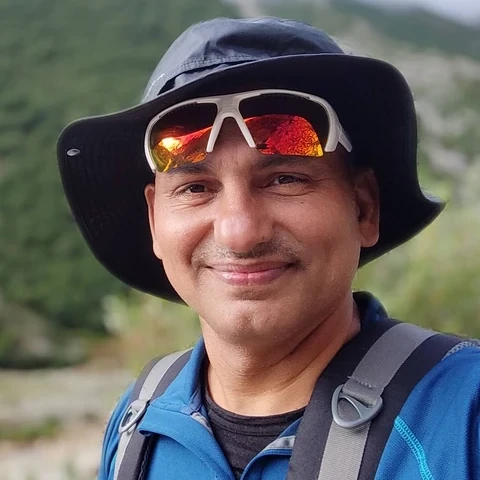
The founder
Dr Satinder Singh Malik
A rare confluence of sky and soul — a former fighter pilot, seasoned adventurer, philosopher, and researcher into the deepest mysteries of consciousness.
Commissioned into the Indian Air Force in 1997, Dr Malik flew state-of-the-art Su-30 MKI fighters, mastering the discipline, precision and courage that define those who operate at the edge of human capability. His journey did not stop at the stratosphere. A keen skydiver, river rafter and mountaineer, he has summited Mt Stok Kangri, Mt Elbrus and Mt Kilimanjaro, and was part of a mountaineering expedition to Antarctica. He has also made the pilgrimage to Mt Kailash and Mansarovar Lake in Tibet. He served as Director of the Indian Mountaineering Foundation and Director of the Air Force Directorate of Adventure.
Parallel to this life of outer adventure runs an equally profound inner journey. Guided by his Gurus — Pilot Babaji and Mahavatar Babaji — his deep immersion in philosophy, yoga and contemplative practice has gifted him with rare insights and what the traditions call direct perception. His work bridges the rigorous logic of science with the luminous depths of Eastern philosophy, charting territory where few thinkers dare to venture.
Dr Malik focuses on knowing rather than faith and belief, following the path of Purushartha — the evolution of consciousness through Dharma, Artha, Kama and ultimately Moksha. His research into the nature of consciousness and the cosmos has been published in peer-reviewed journals including the Scientific God Journal and the Journal of Consciousness Exploration & Research.
Philosophy
Artha is a means, not an end.
Artha is the accumulation of the material resources required to fulfil one's worldly obligations. It is the foundation of Dharma — an enabler that helps one meet challenges and fulfil desires. The virtues of Dharma apply to its accumulation as much as to its use.
In generating a conscious livelihood, we should be aware of the implications and consequences of whatever we do. Six things follow from that.
- Live a life of abundance and fulfilment. Share your wealth, and fulfil your duties.
- Minimise unnecessary wants. Restrict what we buy without need, and our income becomes sufficient for our living — while placing no burden on the Earth's resources.
- Help others; harm none. Our actions at work should not hurt anyone. Sometimes a professional dilemma asks us to hoodwink a framework meant for safety or the environment. That must not be done. The guilt keeps accumulating.
- Refuse corruption. Where a profession requires the collection of wrongful money — for oneself or for those above — resist it. Where resisting is not possible, at least do not take part. What does not belong to us should not be brought home.
- Give a part away. As householders support those who have renounced, a share of income should go to charity — to help someone smile.
- Live in harmony. Some ventures cause social upheaval; even a flashy life causes heartburn. Live without attracting undue negative energy. And where your discretion can help another person, use it that way: a position of power is a position to help. Only the lucky get the opportunity.
A story
Two and a half sesame seeds.
The universe keeps a perfect ledger. This is the story that says what that costs.
The debt
Long ago there lived a pious and honest farmer. Preparing for a sacred ritual one day, he found he was short of the black sesame — til — the offering required. He walked to his neighbour's house and borrowed a small handful, and the neighbour gave it gladly.
The farmer completed his prayers. But in his haste, two and a half seeds slipped from his pouch and fell into the dirt, lost. He returned the handful he had borrowed. He lived a righteous life, forgot the matter entirely, and died of old age — with that tiny, unsettled debt still attached to his soul.
The ox
Because of his good deeds he was not born into suffering. But the debt drew him back to the same family, and he was born as an ox in that neighbour's barn.
For fifteen years the ox worked without pause. It ploughed the fields, turned the heavy oil mill, and hauled carts of grain from dawn until dusk. The neighbour — an old man now — often remarked to his sons how loyal and tireless this particular animal was, outworking every other beast on the farm. It brought the family great prosperity.
The reckoning
One evening a wandering monk, who possessed the vision of past lives, stopped at the farm for shelter. Sitting near the barn, he looked into the eyes of the exhausted ox and recognised the soul of the honest farmer.
“Old friend,” the monk said, “you were a righteous man. Why are you enduring the labour of a beast of burden?”
“In my last life I borrowed a handful of black sesame from this neighbour,” the ox replied. “I returned the handful. But two and a half seeds were lost and never accounted for. Because I died with that debt, I had to come back and pay it.”
“Every drop of sweat I have shed, and every field I have ploughed, has made wealth for this family against it. Tonight the value of my labour has exactly equalled the worth of those two and a half seeds. The debt is paid. In the morning I will be free.”
At first light the sons went to the barn to yoke the animals. They found the great ox lying peacefully on the straw, having died quietly in the night. When the monk explained what the animal had been, and what it had come back to settle, the family wept.
Fifteen years of labour, against two and a half seeds. That is the exchange rate on an unsettled debt — and the reason this desk would rather say the unwelcome thing early than carry one.
Ventures
Six of ours, and one we stand behind.
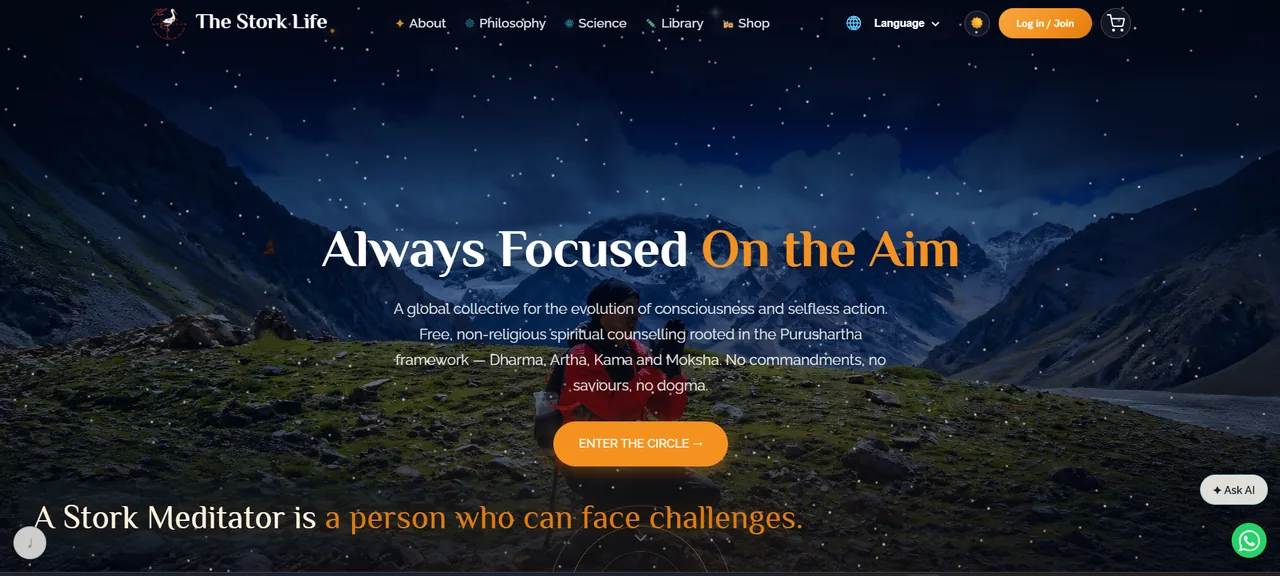
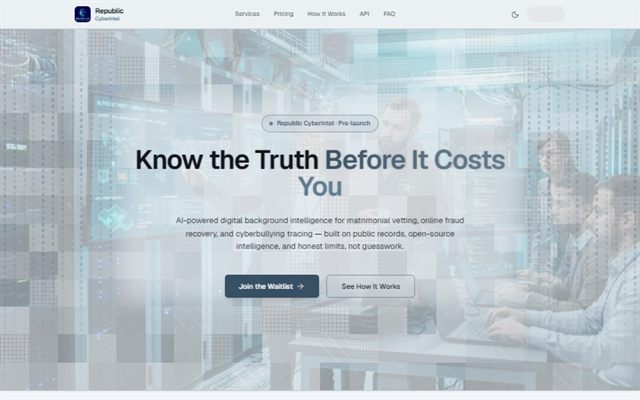
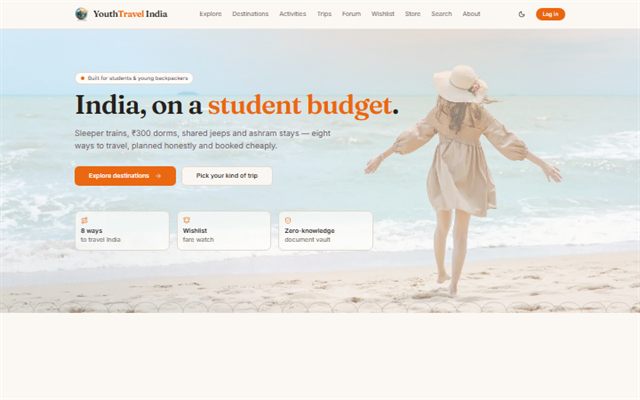
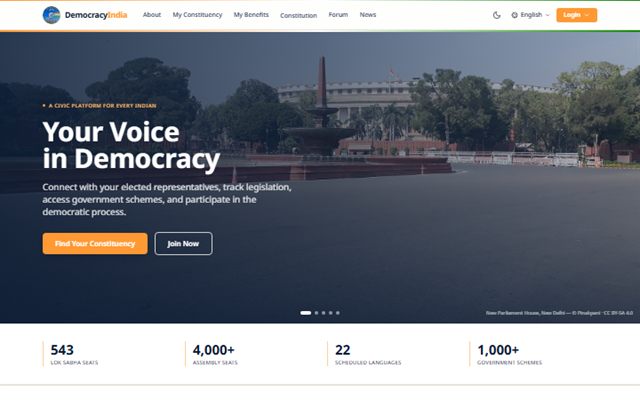
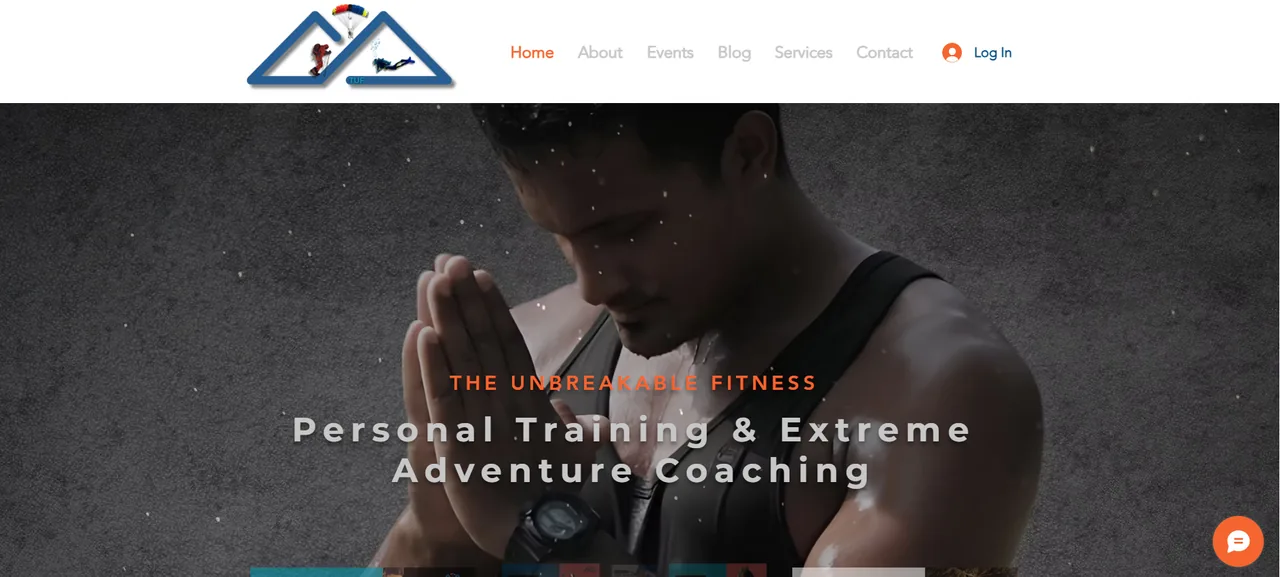
Each of these is a separate business with its own site, its own terms and its own risks. They share an approach and nothing else. The last is a partner's, marked as one — it is here because the method is the same, not because it is.


Questions
About this site.
What is Maximus's Arthashastra, exactly?
An umbrella for several separate businesses and one personal body of writing. It is not itself a company you can buy something from. Each venture has its own site, its own terms and its own risks; the link tiles on the front page go directly to them.
Why this name?
The Arthashastra is a treatise on how material resources should be gathered, held and spent — and on the obligations that come attached. That is the argument above, and it is the one this site is organised around: Artha is a means, and the virtues that govern conduct govern its accumulation too.
The Roman half of the name stands for the method rather than for conquest: preparation, rules agreed in advance, and turning back when conditions say so. If the styling ever starts to promise returns rather than describe discipline, it has failed and should be changed.
Which parts are actually built?
QuantDesk exists and is in private beta with a small group. The creator toolkit is in development. The mobile apps are intentions.
Anything labelled Planned or Exploring means precisely that.
If you want the mechanism rather than the summary — what the desk screens, how a position is sized, where the stop comes from and what happens when it is hit — that is written out in full on how the engine works.
The rest of the questions — accounts, the API, how the model works, money and risk — are on the FAQ. A question that is not on either page is a question worth asking directly: send it over.